Showing posts with label Gin. Show all posts

Thursday, October 17, 2013

Hopped Negroni


Although I’ve been toying with hop-infused booze for some time, it was the cold-drip Negroni at – deep breath – Enrique’s School for to Bullfighting that convinced me to get a move on. It also steered me towards a bit of drink-making kit I already had in the cupboard and was familiar with: ye olde Vietnamese coffee filter (I should also mention that David Nguyen-Luu had a cocktail on the Rockpool Bar & Grill Perth menu that also involved the same filters, but alas, I'm yet to road-test it). If you haven’t got one, a visit to Tran’s Emporium or your nearest Asian supermarket is a must. You’ll be able to pick up a complete kit consisting of filter, tray, tamp and lid for less than a fiver. As well as allowing you to explore the wonderful world of hop-enhanced cocktails, you’ll also be able to brew your own condensed milk-enriched Vietnamese iced coffee (ca phe sua da) in the mornings.

Like all things Negroni-related, don’t think of this as a set-in-stone recipe, but more of a suggested itinerary. From the type of hops and the amount used to the spirits and their ratios, there’s plenty of room for creativity. I might mention, however, that opting for a drier, more restrained vermouth (ie not Antica Formula) would probably help accentuate this drink’s bitter notes. In this instance, I reached for a bottle of Cocchi Vermouth di Torino rather than my usual Negroni vermouth-of-choice, Dolin Rouge.

And now, the hops. Before beer geeks don their battle flannel, I’m no home brewer. This drink is about taking one (a la mode) aspect of brewing and incorporating it in the fine art of making drinks. Perhaps there are more appropriate hops for this exercise. I'd be stoked if there was. But as a starting point, I’m chuffed with how nicely the Negroni played with the Saaz hops I'd bought from my local homebrew store. Straight out the bag, the hop pellets are a little too big to work in the filter so they'll need to be grounded down with a mortar and pestle (ground the pellets till the hops are about the same coarseness as, funnily enough, Vietnamese coffee). While I’ve settled on a ratio of one heaped tablespoon of crushed hops to 90ml of (undiluted) Negroni, feel free to get as oppy as you like. My advice, however, is start small and, if necessary, pass the drink back through the filter. Like the old cooking adage goes, it’s easier to put seasoning in than take it out.

Best of all, once you get this technique down pat, you can use it to flavour other drinks, perhaps using flowers that are local, in-season and not shipped in from elsewhere on the planet. Also, a disclaimer of sorts: while Google searches for “hopped Negroni” didn’t unearth much, this technique isn't new new and I'll willingly acknowledge that people have been flavouring booze since the advent of distillation. Still, it's relatively straight-forward and doesn't require anything woundingly expensive. And if it adds a new string to your drink-making bow, I'm happy. Oh, and I’m pleased to report it tasted how I hoped it would. Resiny hop aromatics with a pronounced bitterness to the usual Negroni flavour profile. Good luck and keen to hear any thoughts you might have.

Hopped Negroni
30ml Tanqueray 10 gin
30ml Cocchi Vermouth di Torino
30ml Campari
1 heaped tablespoon of crushed Saaz hop pellets

Stir gin, vermouth and Campari over ice for 15 seconds. Strain into a Vietnamese coffee filter filled with crushed hops and allow liquid to slowly pass through (this should take around four minutes). Pour hopped Negroni into a rocks glass with two large cubes of ice. Serve at once.

Wednesday, July 18, 2012

Hemingway Daiquiri


Just in time for World Daiquiri Day tomorrow, here's my current method for making a Hemingway. If you haven't got all the ingredients in your cupboard, do yourself a favour and order one at your favourite bar. In the same way not not everything poured in a cocktail glass is a martini (or blah-tini), daiquiris aren't just restricted to the contents of a frozen slushee machine.

While great, the agricole blanc called for in this recipe is entirely optional - feel free to swap out your fave white rum or even white spirit. I've used gin in the past with good results, although calling it a daiquiri doesn't seem quite right. Anyone got a good name for a Rose's-less gimlet with a dash of maraschino?

As history tells us, Papa Doble drank his daiquiris without sugar, however this was merely a survival tactic as the great author was diabetic so don't feel like you've got to grit your way through a cup full of citric acid in the name of tradition.

Also, this recipe assumes you're using ruby grapefruits rather than the tarter white ones (which are hard to find at the moment in Perth). If you do luck out and manage to get some of the white variety, maybe add a touch more simple syrup - I make mine using a 1:1 sugar to water ratio, the sweetness of yours will dictate the amounts added - to snap the drink into balance.

I'd also like to credit Imbibe magazine and 320 Main for hipping me to the lime-shell-in-shaker trick to ramp up drinks with extra pithy-ness. Hooray for resourcefulness, I say.

Hemingway

45ml PMG Rhum Blanc Agricole
22.5ml grapefruit juice
15ml lime juice
7.5ml Luxardo Maraschino
5ml simple syrup (or to taste)
1 spent lime shell1

Combine over ice in a mixing glass and shake for 15 seconds. Double strain into a chilled cocktail glass. No garnish.

1If you've got time, cut the lime shell in half again to maximise surface area and thus flavour extraction, but don't sweat it if your citrus goes straight from the cutting board into the shaker either.

Sunday, June 10, 2012

Too Soon? and Campden Cocktail


Another World Gin Day, another gin-plus-Milanese-bitters-plus-lemon-equals-grapefruit cocktail discovery. Last year it was James Connolly – then at Defectors in Mt Lawley – hipping me to the pleasures of the Jasmine, this year it was the Too Soon? by NYC-based Aussie Sam Ross (of Milk & Honey fame), although I didn't get the cocktails' similarities initially. If you’ve enjoyed a Jasmine or two in your time, this lively, lemon-driven drink is worth adding to your repertoire.

Although my gin cocktail experiments ended on a high note, not everything I mixed was a success. I’m not a fan of sweet martinis and the Savoy Cocktail Book’s Bronx Terrace – basically a 2:1 martini with a squirt of lime juice – did little to change my mind. With all due respect to history and the Europeans maybe vermouth-heavy drinks aren’t for me (hey, I tried). The Campden, thankfully, restored gin enjoyment levels back to normal. Another citrus-powered winner - and Savoy Cocktail Book recipe - this succeeds largely on the combined marmalade and orange thwack of the triple sec and Lillet whereas the Too Soon? relies on the zing of fresh-squeezed lemon juice.

Here’s hoping everyone had an enjoyable and educational World Gin Day.


Too Soon?
(Adapted from a recipe by Sam Ross, published in Gaz Regan’s Annual Manual for Bartenders 2011.)

30ml The West Winds The Cutlass gin
30ml Cynar
22.5ml fresh-squeezed lemon juice
15ml simple syrup1
two orange wedges

Combine over ice in a mixing glass and shake for 15 seconds. Double strain and serve in a chilled cocktail glass.

1 Combine equal parts sugar and water over a saucepan over low heat until combined. Allow to cool and then bottle.

Campden Cocktail

(Pictured above, based on a recipe by Harry Craddock published in The Savoy Cocktail Book)

30ml Brokers
15ml Lillet Blanc
15ml Cointreau

Stir over ice for 30 seconds. Strain into a chilled cocktail glass.

Saturday, June 9, 2012

The Foxtail


Rather than dig up an old school cocktail, here’s a more recent concoction from the States, originally designed to showcase London-distilled Oxley gin. No Oxley in the ol’ Mother Hubbard I’m afraid, but after doing some research on Oxley, it seemed that ol’, ever-reliable Tanqueray 10 might be a suitable replacement in terms of its proof and botanical profile (whole white grapefruit, it seems, is common to both gins).

Sadly, no white grapefruit to be found at my local grocers, so in another last minute sub, in went ruby grapefruit to take its place. With two of the three key ingredients absent, I’m not even sure I should be dubbing this a Foxtail, but improvisation is a necessary part of life at times. On top of that, not crediting Rumor Lounge's Thomas Kunick for the inspiration would be a dog act.

To taste: rich, viscous, a distinct caramel top note to the citrusy palate. There's some almond tucked away in there and the cleansing, dry finish is, what I call, aperitif-like. Although not my usual style of gin drink, there’s a lot to commend about (this knock-off of) The Foxtail. I get the feeling the drink was missing the extra tartness white grapefruit brings to the party, so I’ll be mixing this again once I get my hands on some: hopefully tomorrow if I get lucky with the growers at the Manning Farmers Market.

The Foxtail
(Adapted from a recipe by Thomas Kunick, Rumor Lounge, Las Vegas, NV, published in Gaz Regan’s Annual Manual for Bartenders 2011. Although if you subscribe to Mr Regan's excellent free newsletter, you might have received this recipe - for nix! - in the last week or so.)

30ml Tanqueray 10
30ml DOM Bénédictine
30ml fresh-squeeze ruby grapefruit juice

Shake over ice and strain into a chilled cocktail glass. Garnish with a grapefruit twist.

Thursday, June 7, 2012

The Bee's Knees


With World Gin Day almost upon us, now seems like an appropriate time to dig out a few gin recipes. Can't recall how I arrived at this old school concoction, but I know coming home from Esperance with a jar of local Protea honey and an abundance of lemons had something to do with it. If possible, I'd stick with a higher proof gin. The honey and lemon in this drink are feisty characters and I think the extra oomph helps keep them in line. Incidentally, this is the first all West Australian cocktail I've featured. Easy enough as there's only one form of alcohol in there I suppose, but thinking out loud for a sec: wouldn't it be great if there were more 100 per cent West Australian cocktails around the traps?

The Bee's Knees
(Adapted from a recipe by Erik Adkins of Slanted Door published in the San Francisco Chronicle)

60ml The West Winds The Cutlass (or any high proof London Dry Gin)
22.5ml fresh-squeezed lemon juice
22.5ml Protea honey syrup1

Combine ingredients2 in an ice-filled mixing glass and shake for 15 seconds. Strain and serve up in a chilled cocktail glass. Garnish with a flamed lemon twist.

1 To make honey syrup, combine equal parts honey and hot water. I find it easier to add the honey to the hot water rather than vice versa, but whatever works. Refrigerate before use.

2 There's latitude to make this cocktail as sweet or as sour as you like. For mine, equal parts honey syrup and lemon juice makes for a drink a little on the sugary side. Adjusting with an extra quarter ounce of lemon juice did the trick, but you might like it as is. Balance really is a personal thing and, without getting too wanky about it, the variety of lemons and honey you're using will come into play, too: there's a marked difference between the tart juice of a bush lemon and the musky, floral liquid produced by juicing a Meyer lemon. Kill all that noise, yo. Thanks to my man Darren at Yet Another Foodie Blog, I won't be deviating from the bush lemon (or at least non-Meyer lemon) path when it comes to mixing drinks. That extra zip in the bush lemon juice snapped The Bee's Knees back into lip-smacking balance. Thanks for the heads up, chief.

And just because I want to, here's a link to an excellent local artist I heard on the radio today. "Tired" is one heck of a listen.

DIY Tanqueray 10 button for World Gin Day


Equipment needed
1 bottle of pre-mixed Tanqueray 10 and Lillet Blanc martinis, stored in the freezer for around two months (see below for recipe)
1 unwanted one-inch badge
1 tube of Tarzan’s Grip or any other plastics glue
Newspaper to cover the dinner table

Method
1. After two months or so in the freezer, the plastic inset in your bottle should magically pop out. If this is too long to wait, one can always use brute force to pry the inset off the bottle.
2. Clean the front of your one inch badge and the back of the Tanqueray inset. It’s important for the glue to have a clean, dry surface area to bond over.
3. Squeeze a little dab of glue on your badge and another on the back of the inset. Press together and hold for about five minutes. Feel free to tidy up any excess glue from the join area.
4. Wear with pride on Saturday June 9, 2012, the fourth annual World Gin Day.

Pre-mixed Tanqueray 10 martinis
Keeping pre-mixed martinis in the freezer is a VIP trick taught to me by a fellow pen-for-hire. Not that making a martini is hard – it’s just that this is a frugal way of using leftover vermouth before it goes off (hint: unless you’re a bar or drinker that ploughs through heaps of the stuff, once opened, store your Punt e Mes, Martini & Rosso, Noilly Prat et al in the fridge to keep the inevitable oxidisation at bay. If you get the chance, try comparing a sip of months-old, cupboard-stored vermouth with vermouth from a freshly-opened bottle. The difference is staggering.)

Essentially, this “recipe” boils down to removing x amount of gin from a full bottle of Tanqueray 101 and replacing it with vermouth. Seeing as my martini ratio is 8 parts gin to one of Lillet Blanc, I removed 125ml of gin from my one litre bottle of Tanqueray 10 (the price difference between Tanqueray 10 retail and Tanqueray 10 duty free makes a survey of Tanq 10 stocks mandatory whenever plotting duty-free buying) and replaced it with the same amount of Lillet Blanc. Then screw the lid on tightly and gently shake to combine. Stick in freezer to chill and you’re pretty much good to go.

One important thing to note before you start knocking back pre-mixed martinis like it’s a long weekend Sunday: like most cocktails, dilution is critically important in a martini, perhaps even more so if you’re making martinis with a higher proof gin like Tanqueray 10. Perhaps you’ve heard booze nerds banging on about the quality of ice used in drinks, specifically, cold hard ice made with filtered water. This is why. Straight out of the freezer, your martini is, essentially, uncut. Imagine being served gin and vermouth which hadn’t been stirred down with ice. If you can't be bothered imagining, take a gulp. For most people, introducing (filtered) water is essential in making a martini palatable. Conventional wisdom suggests water should comprise about a quarter of your martini so take that as your baseline and work from there. Feel free to add bitters and your favourite garnish (grapefruit twist!) too, but the most important phase here is undoubtedly adding the water. Happy World Gin Day, ya’ll.

1 While it isn’t necessary to mix a full bottle of martini, I find starting with a pre-defined quantity – be it 500ml, 700ml, 750ml, a litre, whatever – helps with calculating vermouth ratios.

Tuesday, May 22, 2012

White Negroni


You’d better like gin, you’d better like bitter and you’d better like strong: this potent three-piece polls strongly in each category – the latter in particular – while dutifully rebooting the palate with every sip.

According to The PDT Cocktail Book where I’ve lifted this recipe from, the White Negroni was concocted by Mixxit’s Wayne Collins in 2002 as a pre-dinner drink for an event in Bordeaux – very fitting as Lillet was first produced in Graves in 1887 using the region’s famous white grape duo of semillon and sauvignon blanc.

Just quietly, I’m stoked this tastes so good as I tracked down the Suze Salers specifically to mix this drink. While I’ve still got Suze on the shopping list, its acquisition isn’t as urgent as it once was. Don’t be afraid to give this a long, hard stir: this is a drink you’ll want as cold as you can stand it: think martini-esque mouth shivers.

White Negroni
(Based on a recipe by Wayne Collins published in The PDT Cocktail Book)

60ml Brokers Gin
30ml Lillet Blanc
22.5ml Gentiane Salers (or any other gentian-based aperitif)

Stir with ice for 30 seconds and strain into a chilled glass. Garnish with a lemon twist.

Sunday, June 12, 2011

Jasmine

Great riff on the White Lady that James Connolly at Defectors introduced us to last night. Tart, refreshing and a smack of grapefruit flavour, sans any distinctly grapefruit ingredients. Along with fizzes and an early afternoon Tom Collins, this seems like an apt way to make use of surplus lemons.

45ml Gin (in a perfect world, something floral)
30ml Cointreau
15ml fresh-squeezed lemon juice
10ml Campari

Combine and shake with ice and double-strain into cocktail glass. Garnish with an orange twist.

Thursday, May 12, 2011

The Bronx cocktail


45ml Tradewinds Gin
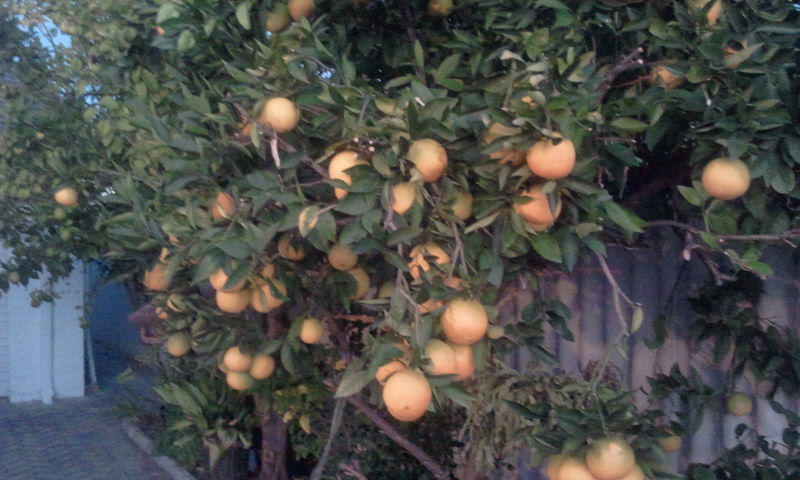
22.5ml fresh squeezed orange juice (from the tree above)
1tsp Noilly Prat
1tsp Punt e Mes
2 drops Peychaud’s Bitters

Combine over ice. Shake. Into a (chilled) (cocktail) glass.

From Gaz Regan’s excellent The Bartender’s Gin Companion (although his recipe is from David Wondrich’s Imbibe, so you tell me how to attribute this correctly)

Saturday, April 2, 2011

Bottle-aged Negroni experiment


On New Year’s Eve, I began a little experiment to see what sort of effect, if any, temperature has on bottle-ageing negronis. I’ve been pleased with the results of the bottle of negroni I began ageing in August 2010 and quite like the mellowing effect time in bottle has on the majestic trinity of gin, vermouth and Campari

If you’re a stickler for due scientific procedure, point your browsers elsewhere. This was spur of the moment stuff and I’d be lying if I said I didn’t mix close to two litres of negroni simply to empty dregs of various bottles that were strewn about the house.

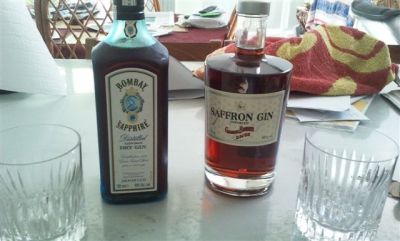
The gin component was largely Gordon’s with the remaining balance made up of Bombay and Gabriel Boudier saffron gin (I still don’t get that gin) while the vermouth mix was a blend of Antico Rosso and Antica Formula. Campari is Campari (part of me has always wanted to try switching the Campari for Bolognese Amaro Montenegro and seeing what happens, but that’s for another time). Half a litre of each spirit was poured into a bucket, mixed, and then carefully poured back into bottles of gin to be put away – one in the fridge, the other under the stairs where I keep my wine.

Four-ish months later and out they come, poured over ice and stirred vigorously to try and bring the “cellar” negroni to typical drinking temperature while cutting the drinks a little. Each was given about three minutes to rest before being looked at. I was actually surprised by how noticeable the differences between the two were.

Fridge-aged: Very floral and citrus-spiked aromas, suggesting a lighter drink. Not the case, the mouthfeel and texture of the drink still quite thick. Taste-wise, very similar to a typical negroni, although certainly more mellow.

Cellar-aged: Ah shay, indeed. Lots sweeter on the nose, it almost smells caramel-like. Similar rich mouth-feel as its fridge-aged sibling, but those bitter wormwood and gentian elements of the vermouth really sit up on the finish. I daresay the cellar-aged negroni also ends with a longer drag of flavour than the fridge-aged version.

My gut feeling is that, similar to wine, keeping things cool keeps things fresher while warmth hurries things up some (think cool fermentation versus a warm fermentation). Complexity is all good and well, but to me that fresh, invigorating kick of a negroni is one of the characteristics of the drink I really enjoy, so short of trying to find lighter vermouths (or experiment more with other spirits in place of the ol’ Punt e Mes), negronis left to age in a cooler temperature are looking like my bottle-conditioned gin, Campari and vermouth cocktail of choice.